The Quiet Unraveling: How Coherence Degradation Silently Erodes Laser System Value
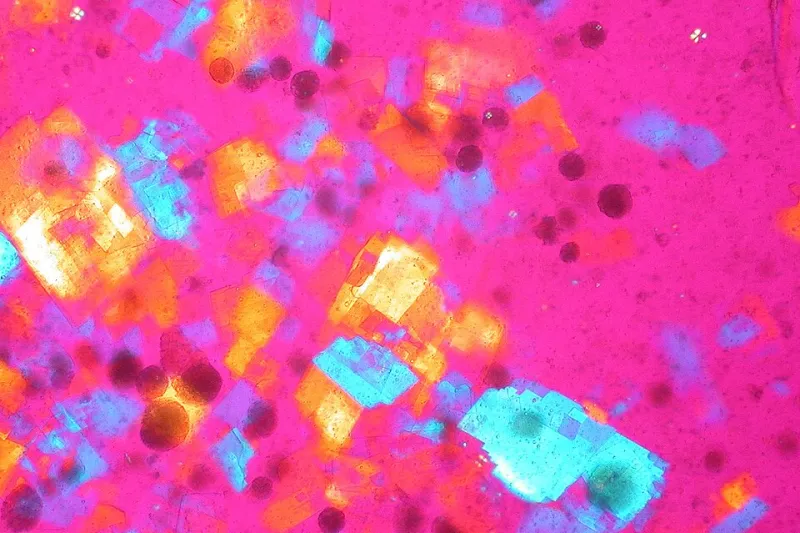
Photo: Kirlf, CC BY-SA 4.0, via Wikimedia Commons
When a photonics engineer specifies a new laser for a production line or a research interferometer, the conversation almost invariably centers on peak power, emission wavelength, and beam quality at the moment of commissioning. Coherence—both temporal and spatial—is typically listed in the datasheet, acknowledged, and then quietly set aside. It is treated as a fixed property rather than what it actually is: a parameter that drifts, degrades, and, in doing so, quietly destabilizes every downstream element of the optical system it feeds.
The financial consequences of that assumption are rarely tallied in a single line item. They accumulate instead across recalibration cycles, failed measurement campaigns, scrapped production batches, and the subtle but persistent underperformance of instruments that were never supposed to need adjustment this soon. For US research institutions operating under tight federal grant timelines, and for industrial facilities where downtime carries a direct dollar figure, coherence degradation represents a hidden liability that the optics industry has been slow to address head-on.
What Coherence Actually Measures—and Why It Slips
At its core, coherence describes the degree to which a light source maintains a predictable phase relationship with itself, either across time at a single point in space (temporal coherence) or across space at a single moment in time (spatial coherence). A perfectly monochromatic point source would exhibit infinite coherence in both dimensions. Real lasers fall well short of that ideal, and they fall shorter still as they age.
Temporal coherence is most directly tied to spectral purity. A laser with a narrow linewidth maintains phase correlation over longer path length differences—its coherence length is long. As the gain medium ages, as thermal gradients shift within the cavity, or as optical coatings on internal elements begin to degrade, the emission spectrum broadens. That broadening may be measured in fractions of a picometer, but the effect on coherence length can be dramatic. An interferometric system calibrated to a coherence length of several meters can find itself operating near its sensitivity floor when that length contracts by even a modest percentage.
Spatial coherence, meanwhile, reflects how uniformly the wavefront behaves across the beam cross-section. Pump inhomogeneities, thermally induced stress birefringence in gain crystals, and contamination of intracavity optics all introduce wavefront aberrations that erode spatial coherence. The beam may look fine to a power meter. It will not look fine to a holographic recording system, a coherent lidar unit, or a fiber interferometer that depends on clean modal coupling.
The Cascade Effect Through Optical Systems
Coherence degradation rarely announces itself through catastrophic failure. Instead, it propagates through an optical system the way a slow leak propagates through plumbing—gradually, insidiously, and in ways that are easy to misattribute.
Consider a fiber-based optical coherence tomography platform used in a clinical research environment. The system's axial resolution is directly proportional to the coherence length of its source. As that coherence length contracts over months of operation, axial resolution softens. Researchers may notice that imaging data seems noisier, that feature boundaries are less crisp, or that depth measurements carry wider uncertainty bands. Without a coherence-specific diagnostic in the workflow, the degradation is easily blamed on sample preparation, software processing, or operator variability. The laser, humming along at its rated power output, escapes suspicion.
In semiconductor lithography and inspection environments, the stakes are higher still. Coherence properties of the illumination source directly influence the contrast transfer function of the imaging system. A coherence shift that would be imperceptible in a casual laboratory context can translate, in a high-numerical-aperture inspection tool, into systematic errors in defect detection. At the feature scales relevant to advanced node semiconductor work, those errors are not recoverable in post-processing.
Precision metrology offers perhaps the starkest illustration. Laser frequency standards and length-measurement interferometers used by national laboratories and calibration services are built around coherence assumptions that are formally documented and periodically verified. But the verification intervals are often set by administrative convention rather than by empirical characterization of how quickly coherence actually drifts in a given operating environment. The gap between those two timelines is where measurement uncertainty quietly accumulates.
Active Stabilization: The Engineering Response
The most established approach to preserving coherence over time is active feedback stabilization. In frequency-stabilized laser systems, an error signal derived from a reference cavity, an atomic transition, or an optical frequency comb is used to continuously correct the laser's emission frequency. The Pound-Drever-Hall technique, now a standard tool in precision photonics, allows linewidths to be locked at levels far below what the free-running laser would achieve.
The limitation of active stabilization is its operational complexity and its sensitivity to the very environmental perturbations it is meant to suppress. A feedback loop that works elegantly in a temperature-controlled optical laboratory may struggle to maintain lock on a vibrating factory floor or in a field-deployed sensing unit. The bandwidth of the servo system, the noise floor of the photodetector used to generate the error signal, and the actuator response time of the frequency-correction element all impose constraints on how effectively coherence can be maintained under real-world conditions.
For spatial coherence specifically, adaptive optics approaches borrowed from astronomical instrumentation have found their way into industrial laser systems. Deformable mirrors and wavefront sensors can partially compensate for thermally induced aberrations in high-power laser cavities, preserving beam quality and spatial coherence over operating cycles that would otherwise see significant degradation. The cost and complexity of these subsystems remains a barrier for all but the most demanding applications, but component prices have fallen steadily over the past decade.
Architectural Alternatives: Building for Longevity
A growing number of laser designers are approaching the coherence stability problem not through active correction but through fundamental architectural choices that reduce the sources of instability in the first place.
Monolithic cavity designs, in which all optical elements are rigidly bonded rather than mechanically aligned, eliminate the slow drift associated with optomechanical mounts and adhesive creep. Planar waveguide lasers, which confine the gain medium and cavity elements within a single substrate, offer a similar advantage while also enabling integration with other photonic components. Semiconductor laser architectures incorporating distributed feedback gratings rather than conventional cleaved facets achieve narrow linewidths with an inherent structural stability that free-space cavities cannot match.
The photonic integrated circuit community has pursued coherence stability as a first-class design objective in ways that discrete laser manufacturers have not always prioritized. On-chip lasers designed for coherent optical communications—where phase noise directly limits data throughput—have driven component-level advances in linewidth and coherence length that are now migrating into sensing, metrology, and scientific instrumentation.
Rethinking the Procurement Conversation
For US research institutions and industrial facilities that depend on laser coherence as a functional parameter rather than a marketing specification, the practical implication is straightforward: coherence stability over the intended service life of the instrument should be a procurement criterion, not an afterthought.
That requires suppliers to provide not just initial coherence specifications but characterized degradation curves under representative operating conditions. It requires end users to establish coherence-specific monitoring protocols rather than relying exclusively on power and wavelength checks. And it requires the broader photonics community to treat coherence lifetime as a legitimate figure of merit—one that belongs on datasheets, in system budgets, and in the engineering conversations that determine whether a laser system delivers on its promise for months or for years.
The physics of coherence degradation is well understood. The institutional habits that allow it to remain a hidden cost are not inevitable. Changing them begins with naming the problem clearly.