Counting Photons, Confronting Physics: The Quantum Noise Barrier That Every Optical Detector Must Face
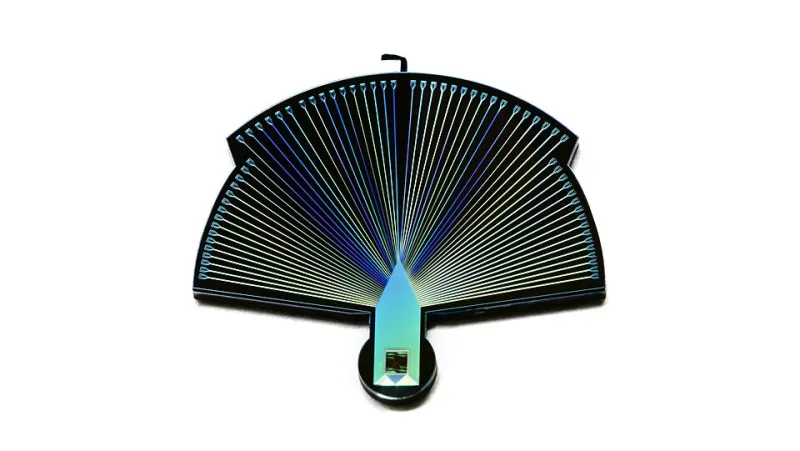
Photo: NASA Jet Propulsion Laboratory, Public domain, via Wikimedia Commons
There is a category of engineering problem that no amount of better materials, cleaner fabrication, or more careful circuit design can solve. Shot noise belongs to that category. Unlike thermal noise, which retreats as temperatures drop, or electronic noise, which can be suppressed with improved amplifier architectures, shot noise is woven into the statistical nature of light itself. It is the noise floor that persists when every other noise source has been eliminated—and it is the reason that some of the most consequential optical systems operating in the United States today are, in a very precise sense, already running at the edge of what physics will allow.
Understanding why requires stepping back from the engineering and into the quantum mechanical reality that underpins all optical detection.
What Shot Noise Actually Is
Light, at the level of detection, arrives not as a smooth continuous wave but as discrete packets—photons—that strike a detector at statistically random intervals. Even when the average rate of arrival is perfectly stable, the moment-to-moment count fluctuates. This fluctuation is not a measurement artifact. It is a direct consequence of the Poisson statistics that govern independent random events. The variance in photon counts equals the mean count itself, which means that the signal-to-noise ratio scales only as the square root of the number of detected photons.
In practical terms, this imposes a straightforward but unforgiving constraint: to double the signal-to-noise ratio in a shot-noise-limited system, you must quadruple the photon count. You can achieve that by increasing the source power, extending the integration time, or widening the collection aperture—but each of those options carries its own costs, and in many real-world applications, none of them is freely available.
The term itself originates from early vacuum tube electronics, where the discrete nature of electron emission produced an audible hiss resembling the sound of falling shot. The underlying physics has not changed since Schottky formalized the description in 1918. What has changed is the range of technologies now operating close enough to this limit that it has become an active design constraint rather than a theoretical footnote.
Where the Wall Appears First
The sectors hitting this barrier most acutely tend to be those where signal levels are intrinsically low, measurement bandwidths are wide, or both conditions apply simultaneously.
Lidar—the distance-sensing technology central to autonomous vehicle navigation, aerial surveying, and atmospheric monitoring—is among the most visible examples. Long-range lidar systems operating at 905 nanometers or 1,550 nanometers must detect single or few-photon returns from diffuse targets at distances of hundreds of meters. At those signal levels, shot noise from even the ambient solar background can overwhelm the return signal. Defense contractors and commercial lidar developers alike have invested heavily in time-correlated single-photon counting architectures precisely because conventional analog detection cannot reach the sensitivity required without drowning in its own quantum noise floor.
Spectroscopy presents an equally demanding environment. In Raman spectroscopy, for instance, the inelastic scattering cross-sections that produce the chemically informative signal are extraordinarily small—typically ten orders of magnitude weaker than the excitation light. Separating that faint fingerprint from the shot noise generated by residual laser scatter and fluorescence background requires either very high photon counts, very narrow detection bandwidths, or both. Clinical and pharmaceutical applications, where sample volumes are small and measurement times are constrained, often cannot satisfy either condition without hitting the quantum wall.
Quantum sensing represents perhaps the sharpest collision with this limit. Systems designed to detect gravitational waves, map neuronal magnetic fields, or probe single molecules are, by definition, operating at or below the single-photon level. For these platforms, shot noise is not a nuisance to be managed—it is the central physics problem around which the entire instrument architecture must be designed.
Engineering Responses to an Immovable Limit
Because shot noise cannot be eliminated, the engineering community has developed strategies to work around it, redistribute it, or exploit quantum correlations to suppress its effects in the measurement quadrature that actually matters.
Heterodyne and homodyne detection schemes represent the classical approach. By mixing the signal with a strong local oscillator field, engineers can amplify the signal before it encounters the detector's electronic noise floor, effectively ensuring that shot noise—rather than thermal or readout noise—becomes the dominant limitation. This is, paradoxically, a form of progress: reaching the shot noise limit means that all other noise sources have been successfully suppressed.
More ambitious approaches involve engineered quantum states of light. Squeezed light, in which quantum uncertainty is redistributed between conjugate variables such as amplitude and phase, can reduce shot noise in one quadrature below the standard quantum limit—at the expense of increased noise in the orthogonal quadrature. The LIGO gravitational wave observatory has deployed squeezed light injection since 2019, achieving sensitivity improvements that would have been impossible through any classical means. Several photonics research groups at US universities are now exploring how squeezed light techniques might be adapted for biomedical imaging and precision spectroscopy.
On the detector side, superconducting nanowire single-photon detectors have emerged as transformative components for applications requiring near-unity detection efficiency at very low dark count rates. Operating at cryogenic temperatures, these devices can register individual photons with timing jitter below 10 picoseconds, enabling photon-counting lidar and quantum communication systems to extract information from signal levels that would be invisible to conventional avalanche photodiodes.
The Asymmetry Between Industries
Not every industry encounters shot noise with equal urgency. Consumer imaging, despite involving photon detection at its core, rarely approaches this limit—ambient light levels are high enough that read noise and fixed-pattern noise dominate long before quantum statistics become relevant. The same is true for most industrial machine vision and telecommunications applications, where signal powers are managed to remain comfortably above the quantum floor.
The divide is sharpest between applications that can afford photons and those that cannot. Astronomical observatories, single-molecule biosensors, quantum key distribution networks, and time-of-flight ranging systems for space applications all share a common predicament: the physics of the problem constrains how many photons are available, and shot noise governs what can be learned from them.
This asymmetry has practical consequences for how research funding and product development are allocated. Companies developing lidar for autonomous vehicles have strong commercial incentives to push detector sensitivity toward the shot noise limit. Biomedical photonics firms pursuing early-stage cancer diagnostics via optical coherence tomography or fluorescence lifetime imaging face similar pressures. The result is a quiet convergence across otherwise unrelated industries around a shared set of quantum-optical challenges.
A Limit That Defines the Field
Shot noise occupies an unusual position in the landscape of engineering constraints. It is simultaneously a ceiling and a benchmark—a measure of how well a system has been optimized and a reminder that optimization has a terminus. Reaching the shot noise limit is, in the parlance of the field, a mark of excellence. Exceeding it, in a meaningful sense, requires leaving classical physics behind.
For optical scientists and engineers, that boundary is not a cause for frustration but for precision. The quantum noise floor defines exactly how much information a given flux of photons can carry—and how much ingenuity is required to extract it.
