Wavelength Wars: The Enduring Battle Against Chromatic Aberration in Precision Optics
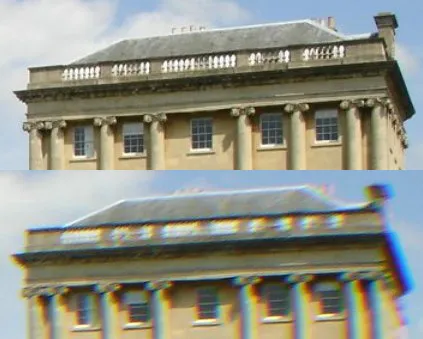
Photo: Stan Zurek, CC BY-SA 3.0, via Wikimedia Commons
In 1666, Isaac Newton famously passed white light through a glass prism and watched it fan into a rainbow. The demonstration was elegant, but for optical engineers who followed in subsequent centuries, that same dispersive property of glass became a source of profound frustration. Every refractive lens bends different wavelengths of light by slightly different amounts—a phenomenon known as chromatic aberration—and the consequences ripple through virtually every optical system humanity has ever built.
The persistence of this problem is not for lack of effort. Opticians have been wrestling with chromatic aberration for as long as precision lenses have existed, deploying increasingly sophisticated countermeasures across more than three hundred years of refinement. And yet, in 2024, chromatic aberration remains a primary design constraint in fields ranging from semiconductor lithography to biomedical imaging. Understanding why this is the case requires a closer look at the physics involved—and at the genuine ingenuity being applied to finally resolve it.
The Physics of the Problem
Light's interaction with glass is governed by the refractive index of the material, a quantity that describes how much a given medium slows and bends an incoming photon. The critical complication is that refractive index is not constant across the visible spectrum. Short-wavelength blue light is bent more sharply than long-wavelength red light, a property called dispersion. When a simple converging lens focuses white light, blue wavelengths converge closer to the lens than red ones, producing a focal plane that is smeared along the optical axis. The result in practice is color fringing at high-contrast edges and a soft, hazy quality in fine detail.
This axial chromatic aberration is compounded by lateral chromatic aberration, in which off-axis wavelengths focus at slightly different magnifications, causing color fringes to appear at the periphery of an image. Together, these two manifestations make chromatic aberration a three-dimensional problem that no single optical surface can resolve.
The Classical Response: Achromats and Apochromats
The conventional answer, developed in the eighteenth century and refined ever since, is to combine lenses made from glasses with different dispersive properties. An achromatic doublet pairs a converging crown glass element with a diverging flint glass element, engineered so that the dispersions partially cancel. The system brings two wavelengths—typically red and blue—to a common focal point, dramatically reducing but not eliminating chromatic error.
For applications demanding higher color correction, apochromatic designs bring three wavelengths into coincidence and reduce secondary spectrum, the residual error that persists even after primary correction. High-end microscope objectives from manufacturers such as Nikon and Zeiss routinely incorporate apochromatic correction, and the difference in color fidelity compared to simpler designs is immediately apparent when imaging stained biological specimens. The trade-off is cost and complexity: a research-grade apochromat may incorporate a dozen or more lens elements crafted from specialty glass formulations, some incorporating low-dispersion materials such as fluorite or extra-low dispersion (ED) glass.
The telephoto lens market illustrates this tension vividly. A professional wildlife photographer using a 600mm prime lens from Canon or Sony is relying on ED glass elements positioned at calculated intervals within the optical train to suppress chromatic aberration across a working aperture. The engineering is impressive, but the residual error is not zero—it is merely reduced to a level the application can tolerate.
Where Classical Approaches Fall Short
In high-stakes scientific instrumentation, tolerating residual aberration is often not an option. Fluorescence microscopy, for instance, depends on precise co-localization of signals from multiple fluorescent dyes emitting at different wavelengths. If the optical system registers red and green channels at slightly different focal planes or magnifications, the apparent proximity of two labeled proteins may be an artifact of the lens rather than a biological reality. Researchers at major U.S. institutions including the Janelia Research Campus and the Chan Zuckerberg Biohub have invested substantially in characterizing and compensating for precisely this kind of chromatic shift.
Hyperspectral and multispectral imaging systems face a related challenge. When a single optical assembly must perform consistently across wavelengths spanning from the near-ultraviolet to the near-infrared, the dispersion accumulated across that range overwhelms what conventional glass combinations can correct. Remote sensing payloads, whether airborne or satellite-mounted, require elaborate post-processing pipelines partly because chromatic aberration introduces spatial offsets between spectral bands that must be computationally removed before the data becomes scientifically useful.
Diffractive Optics: A Different Physical Principle
One of the most promising contemporary approaches inverts the problem. Diffractive optical elements—thin, patterned surfaces that manipulate light through interference rather than refraction—exhibit anomalous dispersion: they bend shorter wavelengths less than longer ones, precisely the opposite of refractive glass. By combining a diffractive element with a refractive lens, designers can engineer a system in which the two dispersive effects cancel with a precision that classical glass combinations struggle to match.
Canon's DO (Diffractive Optics) telephoto lenses and Nikon's PF (Phase Fresnel) designs represent commercial implementations of this principle, achieving comparable chromatic correction in significantly lighter and more compact packages than equivalent all-refractive designs. In scientific contexts, diffractive elements are increasingly incorporated into microscope objectives and spectrograph collimators where their unique dispersion properties offer correction pathways unavailable through glass selection alone.
The limitation of diffractive elements has historically been efficiency: a proportion of incident light is scattered into unwanted diffraction orders rather than directed to the intended focal point. Advances in lithographic fabrication, particularly the ability to produce multi-level and blazed grating profiles with sub-micron accuracy, have substantially reduced this penalty, making diffractive components practical in applications where earlier generations would have introduced unacceptable scatter.
Machine Learning Enters the Design Suite
Perhaps the most consequential development of the past decade is the application of computational optimization to lens design. Traditional optical design software such as Zemax OpticStudio allows engineers to define a merit function—a mathematical description of the desired performance—and then iterate through element configurations to minimize aberrations. The process is powerful but constrained by the designer's intuition about which regions of the solution space are worth exploring.
Machine learning, and specifically gradient-based optimization over differentiable optical models, has begun to change that dynamic. Research groups at MIT, Stanford, and several national laboratories have demonstrated lens designs that no human designer would have conceived, featuring unconventional element spacings and curvature combinations that achieve chromatic correction through paths that classical design methodology would have dismissed. Computational imaging approaches take this further still, deliberately allowing residual optical aberrations and then correcting them in the digital domain using learned reconstruction algorithms. The lens and the image processor are co-designed as a single system rather than as independent components.
This last approach raises genuine questions about where optical engineering ends and computational processing begins—a boundary that is becoming increasingly difficult to locate. Whether the chromatic fringes are suppressed in glass or in silicon, the practical outcome for the end user may be indistinguishable. For optical scientists, however, the distinction matters: understanding and controlling aberrations at the physical level remains essential for applications where computational post-processing is impractical or where the raw optical signal must be clean before it ever reaches a detector.
An Unsolved Problem With a Changing Horizon
Chromatic aberration will not be eliminated by any single technology. The physics of dispersion is not negotiable, and every solution—whether achromatic glass pairing, diffractive correction, or computational compensation—involves trade-offs in cost, efficiency, bandwidth, or complexity. What is changing is the toolkit available to optical engineers, and the pace at which new combinations of these tools are being validated in real instruments.
For the research community, the practical implication is that chromatic aberration is becoming a more tractable problem even if it remains an irreducible one. The next generation of fluorescence microscopes, space telescopes, and multispectral sensors will each represent a different negotiated peace with the dispersive nature of light—a negotiation that has been ongoing since Newton's prism, and that shows no sign of concluding anytime soon.