The Virtue of Sacrifice: How Deliberate Light Loss Is Saving High-Performance Optical Systems
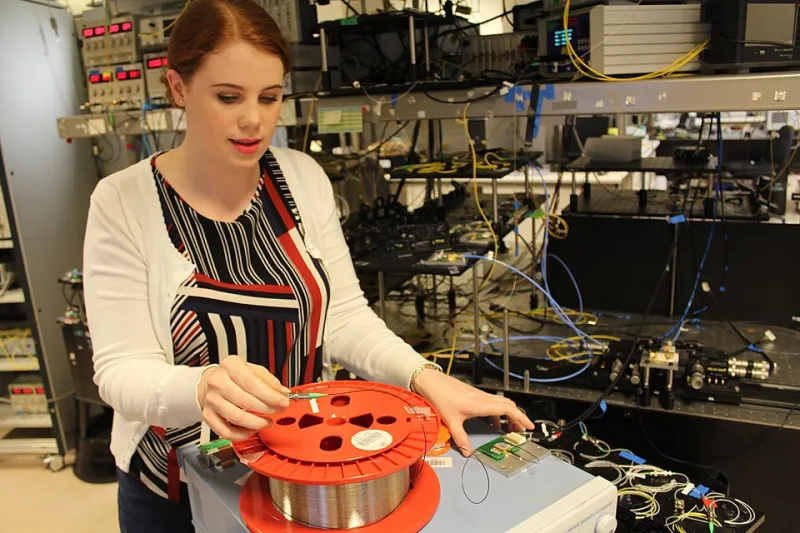
Photo: NiamhTalking90, CC BY-SA 4.0, via Wikimedia Commons
The founding instinct of optical engineering is conservation. Every coating, every polished surface, every alignment procedure exists in service of a single imperative: keep the photons. Transmission efficiency is the metric by which systems are judged, and losses—whether from scattering, absorption, or reflection—are treated as defects to be minimized or eliminated. That instinct is not wrong. But it is incomplete.
A counterintuitive design philosophy has been gaining traction across several branches of applied optics: the deliberate introduction of loss as a tool for stabilizing, clarifying, or protecting a system. The idea is not new in a theoretical sense—optical engineers have long understood that uncontrolled gain can destabilize a laser cavity, and that resonance suppression sometimes requires attenuation. What has changed is the breadth of applications in which intentional loss is now being recognized as a first-order design variable rather than a last resort.
The Problem With Perfect Cavities
High-power laser systems provide perhaps the most instructive case study. In a continuous-wave or pulsed laser operating near its power limits, the cavity optics are engineered to minimize round-trip loss. Coatings are specified to reflectivities of 99.9 percent or better, and every surface is treated as a potential source of inefficiency. The goal is to sustain the highest possible intracavity field with the lowest pump threshold.
The difficulty is that a near-perfect cavity is also a highly sensitive resonator. Parasitic reflections from optical components—windows, beam splitters, even the gain medium itself—can establish secondary resonance paths that couple energy back into the primary mode in unpredictable ways. The result is not simply reduced efficiency; in high-power systems, these feedback loops can induce intensity spikes severe enough to damage coatings, burn the gain medium, or trigger nonlinear effects that destabilize the output entirely.
The engineering response, increasingly, is to introduce controlled attenuation at specific points in the optical path. A partially absorbing element inserted at a location where parasitic reflections converge can suppress the secondary resonance before it accumulates sufficient energy to cause harm. The cost is a measurable reduction in output power. The benefit is a system that operates reliably rather than one that performs brilliantly until it fails catastrophically. In the economics of high-value laser installations—particularly those serving semiconductor lithography or precision materials processing—that tradeoff is rarely difficult to justify.
Ghost Images and the Telescope Designer's Dilemma
Imaging telescopes present a structurally similar problem in a very different context. Large astronomical instruments and high-resolution terrestrial imaging systems depend on optical trains with numerous refractive and reflective elements. Each interface in such a system is a potential source of ghost images: secondary reflections that propagate through the optical path and deposit diffuse or structured light onto the focal plane.
The conventional response is to apply anti-reflection coatings to every surface, reducing the reflectivity at each interface to a fraction of a percent. For narrowband systems operating at a fixed wavelength, this approach is highly effective. For broadband instruments—particularly those designed to operate across wide spectral ranges, as is increasingly demanded in both astronomical and remote sensing applications—anti-reflection coatings cannot suppress reflections uniformly across all wavelengths and angles of incidence.
Several telescope design groups, including teams working on next-generation wide-field survey instruments, have explored a complementary strategy: placing absorptive baffles and light traps at locations where ghost image paths converge, rather than relying solely on surface coatings to suppress the initial reflections. These elements are explicitly designed to intercept and absorb light that has taken an unintended path through the system. They reduce the total throughput of the instrument by a small but measurable amount. They also reduce ghost image contamination by orders of magnitude in the affected spectral regions—a consequence that, for scientific instruments where image fidelity is paramount, justifies the sacrifice.
Parity-Time Symmetry and the Physics of Balanced Loss
The most theoretically sophisticated expression of this design philosophy emerges from a branch of quantum optics and photonics that has attracted substantial research attention over the past decade: parity-time (PT) symmetric systems. The concept originates in non-Hermitian quantum mechanics, but its optical implementation is both practical and illuminating.
A PT-symmetric optical system pairs regions of gain with regions of equal and opposite loss. Under specific conditions, such a system exhibits behavior that neither a purely gain nor a purely lossy system would produce on its own. Near what researchers call the exceptional point—the boundary between PT-symmetric and PT-broken phases—the system becomes exquisitely sensitive to perturbations, a property that has been proposed as the basis for ultra-sensitive sensors. Beyond the exceptional point, the gain and loss decouple, and the system's eigenvalues become complex, producing dynamics that can be exploited for controlled mode selection and unidirectional light propagation.
Experimental implementations of PT-symmetric waveguides and resonators, demonstrated in silicon photonics platforms at several US research universities, have shown that the deliberate introduction of absorption into one arm of a coupled resonator system can suppress unwanted supermodes, enforce single-mode operation, and enable optical isolation without the magnetic materials traditionally required. In each case, the loss is not incidental—it is load-bearing. Remove it, and the system's carefully constructed behavior collapses.
Rethinking the Efficiency Metric
What unifies these cases is a challenge to the way optical system performance is typically quantified. Transmission efficiency, insertion loss, and quantum efficiency are all photon-counting metrics. They measure how many photons reach the detector or output port relative to how many entered the system. They do not, by themselves, capture whether the photons that arrived were the right ones, whether they arrived at the right time, or whether the system remained stable long enough to be useful.
A high-power laser that operates at 95 percent efficiency but suffers periodic coating damage events is less productive, over its operational lifetime, than one that runs at 91 percent efficiency without incident. A telescope that achieves 99 percent surface transmission but generates ghost images that contaminate 15 percent of its focal plane is less scientifically productive than one that accepts a modest throughput penalty in exchange for a clean image. A photonic sensor that operates at maximum gain but requires bulky magnetic isolators to prevent feedback oscillation is less suitable for integrated platforms than one that achieves isolation through balanced loss.
The engineering lesson is not that photons should be wasted carelessly. It is that the value of a photon depends entirely on context. A photon traveling a parasitic path through a laser cavity is not merely unhelpful—it is actively destructive. A photon absorbed by a baffle that would otherwise have formed a ghost image is not a loss; it is an investment in image quality. A photon surrendered to the lossy arm of a PT-symmetric resonator is the price of a functionality that no conservative system can provide.
A Maturing Design Vocabulary
The optical engineering community in the United States has historically been organized around the pursuit of efficiency. The national laboratories, the major defense contractors, the academic research groups that have defined the field's standards—all have treated loss minimization as axiomatic. That framework produced extraordinary results, and it remains the correct starting point for most design problems.
But as optical systems grow more complex, operate at higher power densities, and are asked to perform across broader spectral ranges and in more demanding environments, the pathologies of near-perfect efficiency are becoming harder to ignore. Resonance instabilities, ghost image contamination, feedback-induced damage, and unwanted mode competition are not exotic failure modes. They are the predictable consequences of building systems that preserve every photon without asking whether every photon deserves to be preserved.
The designers who are navigating these challenges most effectively are those who have expanded their vocabulary—who can reach for intentional loss as readily as they reach for a high-reflectivity coating, and who understand that in certain configurations, the most valuable thing a photon can do is disappear.